
Concrete Floor Repair: How to Identify the Damage and Choose the Right Fix
- 4 damage types: hairline cracks, spalling, pitting, efflorescence
- Crack width under 0.3mm is almost always cosmetic, not structural
- Wrong diagnosis, not the repair itself, is what drives up costs
- DIY coatings fail without correct substrate preparation and moisture assessment
- Surface repair and structural assessment are different scopes, done by different specialists
Enquire Today
Testimonials
Posted on Google
 Brigitte CalvertOctober 28, 2025
Trustindex verifies that the original source of the review is Google.
Thank you Ian from Handiwerx! Ian's work was exceptional! Very skilled at his craft! An excellent result. Highly recommended!Posted on Google Dilini NavarathneOctober 15, 2025Ian did a great job on our laminate timber flooring and on a cabinet door..we are glad we decided to restore and not replace the flooring as the chips were not even noticeable after it was fixed up..thanks Ian.Posted on Google
 Sean CoxSeptember 17, 2025outstanding work by Ian and Rita. They have transformed our kitchen floor. An absolute brilliant job could not recommend them enough.Posted on Google
 DianneSeptember 5, 2025Very, very pleased with the repair work done by Ian and Rita. You'd never know where the floor had been scratched.Posted on Google
 WM CPTAugust 11, 2025After scouring the internet in search of a company who was able and willing to fix up a badly chipped laminate floor I eventually got in touch with Ian from Handiwerx. Ian was really easy to deal with from the initial call until after the job was done. Not only was he willing to come out to me based in regional Victoria, he offered the most competitive price by far. Not only this, the workmanship was absolutely excellent. No shortcuts were taken and the utmost care was taken to reach the very best outcome. The work was done in such detail, that I’m uncertain where the initial damage was. There seem to be many guys out there claiming to be able to do this type of work and even comes with exorbitant cost. With Handiwerx, I felt confident with this business and am glad that I trusted my instincts. To Ian, thank you very much!Posted on Google
 Phil ZJune 12, 2025Hired handiwerx after receiving several quotes from other places to fix my kitchen laminate, they showed up on time, paid a lot of attention to detail and Im very happy with the work and pricing. Thanks again :)Posted on Google
 PSDFebruary 8, 2025Unbelievably good work. Fantastic results. Had several deep gauges in my laminate floors caused by workmen dropping tools. I was preparing to rip out and replace the whole laminate floorboard. Thank god I came across Ian at handiwerx. He convinced me he could save the floor by patching it. Glad I listened. The pics speak for themselves. Saved me a ton of time and money, the whole job took less than an hour. Now I don't even remember where the holes were. I bet you can't see them either. The work is that good. Thank you Ian. You deserve all the success in the world. I wish I could give you 6 stars.Posted on Google
 Sam PilgrimFebruary 5, 2025Before Ian arrived there was a deep scratch on my floating floor. After he left I was no longer sure were it used to be
What You Are Looking At: Common Types of Concrete Floor Damage
Concrete is a porous, reactive material. It expands and contracts with temperature, absorbs moisture, and shifts under load over time. Some surface deterioration is expected, particularly in Melbourne garages, basements, and older internal slabs. Most concrete floor damage is repairable without full slab replacement. That is the central fact this guide is built around.
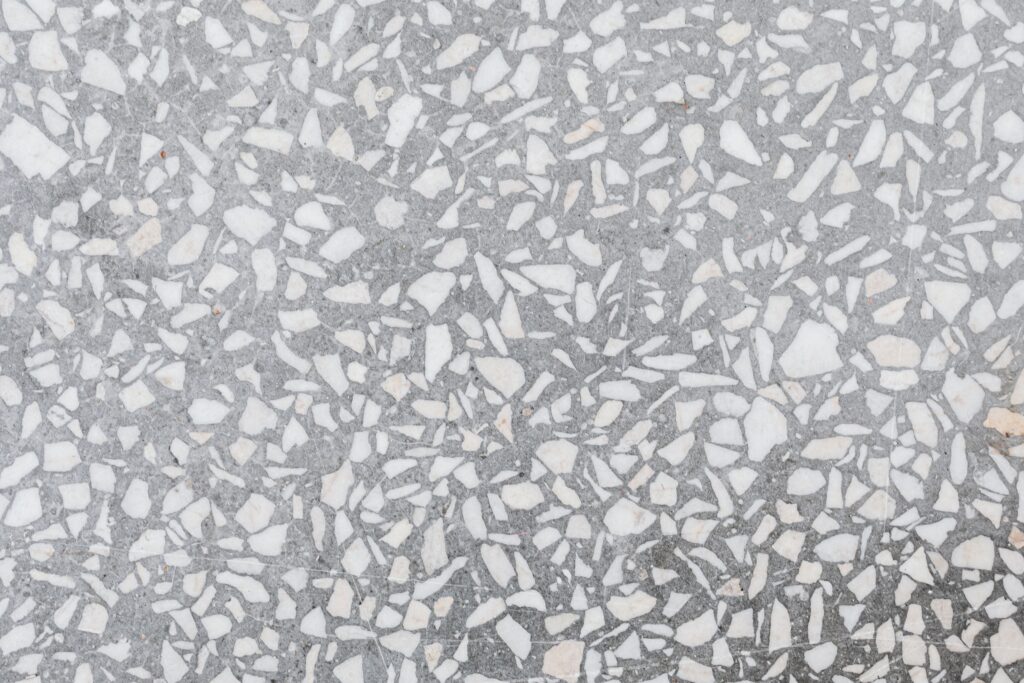
The four damage types most commonly found on concrete floors
- Hairline cracks are thin, shallow lines across the surface. Usually caused by the concrete curing and shrinking, or by thermal movement across many seasons.
- Spalling and pitting are where the surface layer breaks away in flakes or small craters, often a sign that moisture trapped beneath the surface has expanded and pushed upward.
- Efflorescence is the white, chalky deposit that appears along edges or joints. Mineral salt left behind when water moves through the slab and evaporates.
- Displaced or sunken sections are areas where one part of the floor sits visibly lower than another.
Here is the diagnostic reality: appearance does not determine severity. A wide crack can be entirely cosmetic. A small patch of spalling can signal a moisture problem three centimetres below the surface. What matters is the pattern, location, and behaviour of the damage, not how bad it looks at first glance.
How to Read Your Crack: Width, Pattern, and Location
Width: the first thing to check
Hairline cracks under roughly 0.3mm are nearly always cosmetic, normal shrinkage or thermal movement working its way to the surface. Cracks at 3mm or wider, especially where one side sits higher than the other, need a licensed structural engineer, not a surface repair specialist. Getting the diagnosis wrong is what makes concrete floor repairs expensive, not the repair itself.
Pattern: what the shape is telling you
Random map cracking across a slab is almost always surface-level. A straight crack running from a corner or doorway that appears to be growing is worth monitoring closely. Parallel cracks following a consistent path suggest something moving beneath the surface, drainage, roots, or subsoil settlement.
Location: where the crack sits
Cracks near load-bearing walls, failed expansion joints, or areas with large trees or drainage problems nearby warrant a structural engineer's eye before any repair work begins. Surface repair and structural assessment are different scopes of work performed by different specialists. Treating them as the same is where misdiagnosis begins.
Not sure what you are looking at? Handiwerx offers obligation-free assessments for surface repair scope across Melbourne. Describe what you are seeing and get a straight answer before you make any decisions.
When Moisture Is the Real Problem: Spalling, Pitting, and Efflorescence Explained
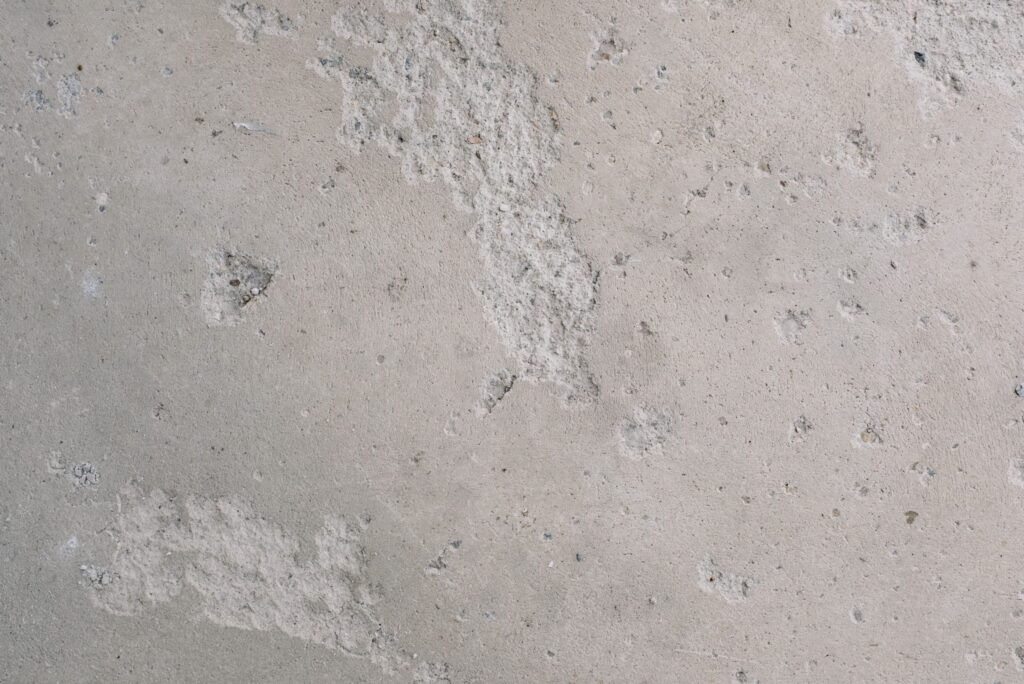
Correct substrate preparation, materials matched to the actual concrete condition, and a root-cause diagnosis before anything is applied- that is what separates a repair that holds from one that needs redoing.
Why spalling and pitting mislead people
Spalling and pitting look like surface wear. Sometimes that is exactly what they are. But when moisture is migrating upward through the slab, the surface is just where the problem becomes visible. A topcoat applied over active moisture will not hold; it was never going to.
Why epoxy coatings keep failing
Coatings and DIY fillers fail when the substrate is not correctly prepared or when moisture has not been addressed first. The coating delaminates because the real problem was ignored before the repair started. This is not a product failure. It is a sequencing failure.
What efflorescence is actually telling you
That white, chalky residue along edges or joints is mineral salt left behind as moisture moves through the concrete and evaporates. Efflorescence is not structurally dangerous on its own. Where it appears alongside spalling or surface damage, though, moisture is part of the picture, and patching the surface without addressing it produces a repair that lasts months, not years.
Repair or Replace? What the Decision Actually Comes Down To
Most people who find cracked or damaged concrete assume the floor needs to go. Full slab replacement, demolition, disposal, re-pouring, and weeks of curing is expensive, disruptive, and usually unnecessary.
One Handiwerx client put it plainly:
"I was preparing to rip out and replace the whole laminate floorboard. Thank god I came across Ian at Handiwerx. He convinced me he could save the floor by patching it."
That outcome is not unusual.
Surface repair is the right scope when the damage is cosmetic or moisture-related, the slab is structurally stable with no displacement, and the surface can be correctly prepared before treatment. Concrete patching, crack filling, and resurfacing cover the majority of residential damage seen in Melbourne garages and internal slabs.
The limits are real. If a crack is actively widening, if floor sections have shifted in height, or if there is any sign of soil movement beneath, a structural engineer needs to assess the slab before repair work begins. Surface repair over an unresolved structural problem will not hold. Get the sequence right and repair is almost always the cheaper, faster path.
What a Professional Concrete Floor Repair Actually Involves
Professional repair starts before any product is applied. Diagnosis first, identifying the damage type, checking for active moisture, and removing loose or contaminated surface material. That preparation is why professional repairs hold when previous attempts have not.
Handiwerx uses German-designed repair products engineered specifically for surface repair work. These are not hardware store fillers. The material science is different, and the result reflects that.
For most residential concrete floors, cracked, pitted, or moisture-stained, the damage falls within cosmetic or moisture-related scope. If that describes your floor, an obligation-free assessment from Handiwerx is the practical next step. No commitment. A straight answer about what your floor actually needs.
Areas We Serve
Frequently Asked Questions
How do you repair cracks in a concrete floor?
The method depends on crack width and cause. Hairline cracks are filled with a flexible crack filler after the surface is correctly prepared. Wider cracks need assessment before any product goes down. Sequence matters: preparation before application, diagnosis before repair. Most cracks a homeowner encounters fall within cosmetic repair scope.
How do you repair large cracks in a concrete garage floor?
Width alone does not determine whether repair is appropriate. Cracks at 3mm or wider need a structural engineer’s assessment if there is displacement or ongoing movement. Where the crack is wide but the slab is stable and level on both sides, concrete patching by a surface repair specialist is the correct scope.
How do you repair a pitted concrete garage floor?
Pitting usually comes from moisture damage or surface contamination. The fix starts with removing loose material and understanding the moisture pathway, not applying a patching compound over the top. Skipping preparation is why most DIY pitting repairs fail: the product bonds to a compromised surface and lifts.
How do you repair hairline cracks in a concrete garage floor?
Hairline cracks under 0.3mm are almost always cosmetic, a normal result of concrete curing and thermal movement, not structural failure. Professional crack filling or resurfacing handles them reliably once the surface is correctly prepared.
How do you repair an unlevel concrete floor?
An unlevel floor needs professional assessment before any repair is attempted. Surface wear can sometimes be corrected through resurfacing. Subsidence or soil movement beneath the slab requires structural remediation, a different scope entirely. Applying a resurfacing product over a floor that is still moving will not hold.
Get in Touch With Handiwerx Today!
Melbourne is known for its rich culture and stunning homes – ensure your space is just as impressive. Trust Handiwerx with your timber floor repairs and let us restore the heart of your home. Get in touch with Handiwerx today to schedule an assessment, and together, we’ll make your floors a testament to your home’s elegance.
Our Clients

